B2B SaaS PPC Strategy for 2026: How to Drive Revenue with High-Intent Google Ads Campaigns


Introduction to PPC Strategies
Effective B2B SaaS PPC starts with a clear view of your market and the buyer journey. SaaS marketers must use effective strategies to avoid wasted ad spend and ensure their PPC efforts reach the right audience at the right time. People search with different intent at each stage of their buyer journey. At Team 4, we find that Google Ads is the most effective PPC channel in 2026 for B2B SaaS companies due to being able to target high-intent users ready to buy.
Google Ads offer strong reach and precise controls. Used well, Google Ads campaigns can drive qualified leads and consistent pipeline, not just clicks. A well-planned programme supports core business goals, lifts brand visibility, and produces reliable sales opportunities.
The right tactics also reduce waste and minimise the risk of targeting the wrong audience. Tight targeting, clean data, and disciplined PPC campaigns help SaaS marketers pay for the right traffic and avoid the wrong clicks. PPC moves fast, so staying current with platform changes and best practice is essential for ongoing gains.
Ad Campaign Setup
Building campaigns around intent is vital in SaaS. Keywords in the SaaS space often have high CPCs, and only a small set carry real purchase intent. Mismanaging your SaaS marketing budget or ad spend can quickly erode ROI, so it’s crucial to structure SaaS PPC campaigns around clear intent to maximise efficiency and minimise waste. A generic setup leaks budget. A focused setup compounds results.
Start with explicit goals. If your objective is lead generation or direct demo bookings, that choice will drive keyword breadth, match types, and bid strategies. Clarity keeps the account aligned and stops drift.
Team4’s funnel-based structure
At Team4, we use a funnel-based account structure. This approach ensures each stage of the marketing funnel is addressed with tailored campaigns. This keeps keyword intent aligned to the conversion objective and minimises waste.
Funnel-Based Account Structure
TOFU
- Keyword intent: Informational, non-transactional content topics.
- Conversion objective: eBook or lead magnet download, with the goal of engaging potential customers at the earliest stage of their journey.
- Example keyword: CRM requirements template
MOFU
- Keyword intent: “Software”, “tool”, “platform”, “system” terms that signal solution exploration.
- Conversion objective: Contact Us or Book a Demo, aiming to capture the interest of decision makers considering SaaS solutions.
- Example keyword: CRM Software
BOFU
- Keyword intent: Branded terms and specific high‑intent product queries.
- Conversion objective: Contact Us or Book a Demo, with a focus on converting high-intent prospects into SaaS clients.
- Keyword: Alternative to Hubspot

Each stage gets its own campaign, budget, targets, audiences, and creative. This simplifies reporting and puts more spend where it will convert.
Keyword Research & Selection
Keyword research is still essential in 2026. It shows how users describe their needs and how close they are to buying. Blend tools, first‑party data, and real SERP checks.
- Use keyword research tools: Semrush, Moz, and Google Keyword Planner to size demand of your product category, find variations and understand how your users are searching for you.
- Mine your own data: Google Search Console reveals queries already bringing you traffic and how you rank. Review top-traffic landing pages and queries, check what terms are matching with solution pages, and, filter terms by 'software', 'tool', 'platform' to identify high intent transactional keywords.
- Validate intent in the SERP: Search your shortlisted terms in search engines. Analyse search results to see if organic results match commercial intent and to identify current market trends. If results are guides and comparisons, treat as TOFU/MOFU. If they are vendor pages, treat as MOFU/BOFU.
- Build a negative keywords list: Use negative keywords to filter out irrelevant search terms, such as job seekers, students, open‑source, DIY, and competitor support queries where relevant. This optimises ad spend and improves campaign relevance. Keep adding poor performers from search terms reports.
- Iterate: Promote high‑performing search terms to exact keywords. Add weak and irrelevant terms as negative keywords. Review weekly during ramp‑up, then at a steady cadence.
Match type discipline
Google’s matching has broadened, and its AI often overextends intent, especially in low conversion volume accounts. Control matters.
- Contact/demos: Start with exact match for strict intent control.
- Lead magnets: Start with exact and phrase. Test broad once you have clean negatives and good conversion data.
- Always monitor search terms: Tighten with negatives and adjust bids or exclusions by theme.
Landing Page Optimisation
Landing pages convert interest into action. Relevance, speed, and clarity improve user experience and lower costs. Optimising landing pages is essential to maximise conversions from your paid traffic.
- Match message and intent: Align the headline, offer, and form to the keyword and ad copy. Remove disconnects.
- Lift Quality Score: High relevance raises Quality Score and can reduce CPC. Keep the keyword in the page title, URL slug, H1/H2, and early copy (naturally).
- Test layouts and offers: Use A/B tests for hero copy, form length, trust elements, and CTAs. Change one variable at a time.
- Use behavioural tools: Heatmaps and session replays (e.g. Hotjar) show friction. Fix dead clicks, slow elements, and confusing forms.
- Close the feedback loop: Connect CRM data and conversion tracking to see which pages generate qualified leads and revenue, not just form fills.
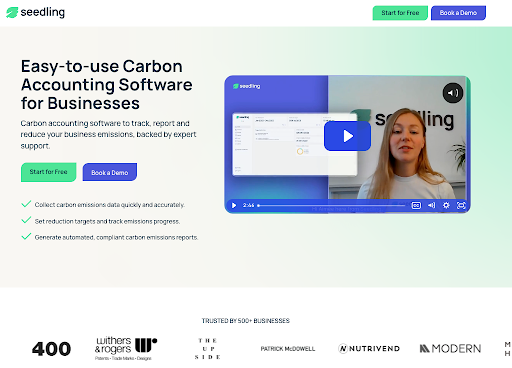
Essential page elements
- Clear H1 with the core value proposition.
- Short subheading that addresses a key pain or outcome.
- Primary CTA above the fold, repeated after proof points.
- Social proof: logos, reviews, case results, security badges.
- Concise feature bullets tied to benefits.
- Fast load on mobile and desktop, accessible design, and minimal form fields.
- Privacy reassurance and expectations on follow‑up.
Conversion Tracking and Analysis
You cannot optimise what you cannot measure. Accurate tracking and clean data power smarter bids and better creative.
- Implement robust tracking: Track macro conversions as primary conversions(demo request, trial start) and qualified micro conversions as secondary conversions (product view, pricing visit, calculator use), and monitor conversion rates to assess PPC performance and ensure efficient use of ad spend.
- Define success clearly: Mark only meaningful actions as primary conversions in Google Ads to guide bidding.
- Use offline conversion tracking: For full‑funnel clarity, bring CRM outcomes back into Google Ads. Capture the GCLID with each lead and upload later once the deal stage is known.
- Integrate your CRM: Many CRMs, such as HubSpot, have native Google Ads integrations for offline conversions. You can also upload CSV files if GCLIDs are stored.
- Segment by channel and campaign: Find which routes create real pipeline, not just volume.
Analysis cadence
Many SaaS marketers can waste budget by treating Google Ads campaigns as set and forget. Google Ads campaigns must be monitored and optimised regularly to ensure that wastage is being minimised and opportunies are being identified and seized. Find an example Google ads analysis cadence below:
- Daily: Spend, CPC spikes, tracking health, clear anomalies.
- Weekly: Search terms, negative list updates, ad tests, landing page checks.
- Monthly: Funnel metrics, pipeline impact, bid strategy tuning, budget reallocation.
Ad Copy and Messaging
Strong ads speak to the user’s need at that moment. To maximise the impact of your paid ads to effectively engage your target audience. Keep language clear. Avoid fluff. Make the next step obvious with a clear CTA (call-to-action).
Principles
- Align to funnel stage: TOFU offers education. MOFU frames solution value. BOFU answers why you, now.
- Use keywords early: Put the main keyword in headlines and descriptions for relevance and scannability.
- Lead with outcomes: State the benefit in concrete terms. Follow with a key feature that makes it possible.
- Employ social proof: Ratings, customer counts, case outcomes, industry certifications.
- Direct CTAs: “Book a demo”, “Start a free trial”, “Download the guide”. Avoid vague asks.
Assets and testing
- Run Responsive Search Ads with structured pinning only where legal or brand requires it.
- Add sitelinks (pricing, case studies, security, integrations), callouts, and structured snippets.
- Test multiple themes: pain‑point, benefit, proof, risk‑reversal.
- Replace poor-performing headline and descriptions with iterations of the best performers.
Scaling Ad Campaigns
Scale only what works. Grow budget where quality holds and unit economics remain strong.
- Watch Impression Share: If you are losing share due to budget or rank on proven keywords, there is headroom to scale.
- Expand cautiously: Add close variants, long‑tail exacts, and test phrase or broad only after negatives and tracking are solid.
- Use automated bidding wisely: With stable, trustworthy conversion data, test Target CPA or Target ROAS. For lead value variation, use value‑based bidding.
- Layer audiences: Add observation audiences (e.g. remarketing, in‑market, customer lists) and adjust bids when performance is proven.
- Extend coverage: New geographies, time blocks, and devices can add efficient volume once core markets are saturated. Consider testing additional PPC channels, such as Google Ads and LinkedIn Ads, to reach new audience segments and scale results efficiently.
Focus on qualified pipeline and revenue. Scaling spend without quality controls raises cost per acquisition and lowers sales confidence.
Measuring Ad Performance
Measure what matters across the full funnel. Clear measurement and alignment with sales are critical for achieving PPC success, ensuring that paid media campaigns deliver faster and more effective results. Agree definitions and dashboards with Sales and RevOps to avoid disputes later.
Core metrics
- Channel efficiency: CTR, CPC, CVR, CPA, and ROAS for directional control.
- Mid‑funnel health: Form‑fill to MQL rate, MQL to SQL rate, SQL to Opportunity rate.
- Bottom‑funnel impact: Opportunity to Closed‑Won rate, revenue per lead, and LTV:CAC.
- Quality indicators: Weighted pipeline from paid search, sales cycle length by campaign, demo no‑show rate.
Process
- Set targets per metric and stage. Document thresholds for action.
- Attribute fairly. Use consistent UTM standards and a clear primary model (e.g. position‑based or data‑driven).
- Report trends, not one‑day spikes. Use 14–30 day windows for stable learning.
- Turn insights into tests with a short, written hypothesis and success criteria.
Lead Nurturing and Scoring
Not all leads are equal. Scoring and nurture help Sales focus on the right prospects and keep others warm until ready. Nurturing potential leads through targeted content and scoring helps move them closer to becoming customers.
- Define fit: Industry, company size, tech stack, and region. Assign points for ideal profiles.
- Define behaviour: High‑intent actions such as pricing visits, integration pages, or repeat product views carry more weight than a single blog view.
- Build nurture tracks: Educational sequences for TOFU, product education and social proof for MOFU, and ROI or security proof for BOFU.
- Close the loop: Feed Sales outcomes back into scoring. Remove signals that do not predict revenue. Increase weight for those that do.
Healthy scoring reduces Sales friction and surfaces prospects that merit faster outreach.
For more information on implementation read our HubSpot lead scoring guide.
Optimising for High-Value Prospects in Google Ads
Optimise for the leads that become customers, not just the cheapest forms. This is where SaaS PPC becomes a growth engine.
- Identify high‑value actions: Opportunities, SQLs, or trials that pass a product‑qualified threshold.
- Upload as conversions: Push these offline conversions into Google Ads to train bidding. Include GCLID so clicks map to outcomes. Many CRMs have a native integration for this see our guide on importing offline conversion events from HubSpot for more.
- Choose the right objective: If you have around 30 or more high‑intent conversions per month, bid directly to that event.
- If volume is lower: Assign values to different conversion actions based on their likelihood to close (for example, Demo = £100, Pricing Visit = £30, eBook = £5). Use value‑based bidding so Google optimises towards the mix that yields the highest expected revenue.
- Refine with lead scoring: Use CRM scores to segment uploads. Create separate conversion actions for High, Medium, and Low quality if your volume supports it.
This approach tells the platform which signals matter and steers budget towards prospects that drive revenue growth. By focusing on high value prospects and maximising conversions, SaaS companies can acquire more customers through focused optimisation.
Ad Campaign Budgeting
Budget is a strategy lever. A clear, funnel‑based structure makes it simple to fund high‑intent terms while testing lower‑intent audiences at a sensible level. Taking a disciplined approach helps avoid the common mistake of throwing money at campaigns without a clear strategy.
- Start with intent: Allocate most spend to BOFU and MOFU keywords that generate demos. Assign a smaller, capped budget to TOFU for list growth and remarketing.
- Use pacing: Track month‑to‑date spend and results against targets. Adjust daily budgets weekly based on performance and runway.
- Portfolio strategies: Group similar campaigns under shared CPA or ROAS targets to balance fluctuations.
- Continuous reallocation: Move funds from underperforming campaigns to proven ones. Do this on a planned cadence with notes so learning is preserved.
- Guardrails: Set maximum CPC thresholds and Impression Share floors for critical keywords to protect efficiency and coverage.
Conclusion and Next Steps
Effective B2B SaaS PPC blends intent‑led structure, disciplined keyword control, relevant landing pages, and dependable tracking. Many SaaS marketers struggle to reach their target market and target audience effectively, but working with a B2B SaaS PPC agency and experienced PPC specialists can help overcome these challenges. The goal is simple: reach the right people at the right moment and turn that attention into qualified pipeline.
Understanding the SaaS niche is crucial for success. Using the tactics above will produce a Google Ads account that drives conversions and consistent revenue, not just traffic. Keep testing small, measure clearly across the funnel, and feed CRM outcomes back into your bidding. This steady loop is how you scale without waste.
Team 4 helps B2B SaaS companies run PPC that is reliable, efficient, and tied to revenue. If you would like a pragmatic review of your setup and a plan to remove waste, book a short session with our team. We will show you exactly where to focus next.
Or read our Google Ads optimization checklist, for a practical list of settings to check to ensure that your SaaS Google Ads campaigns are setup optimally.