Claude Code for SaaS SEO: A Practical Guide
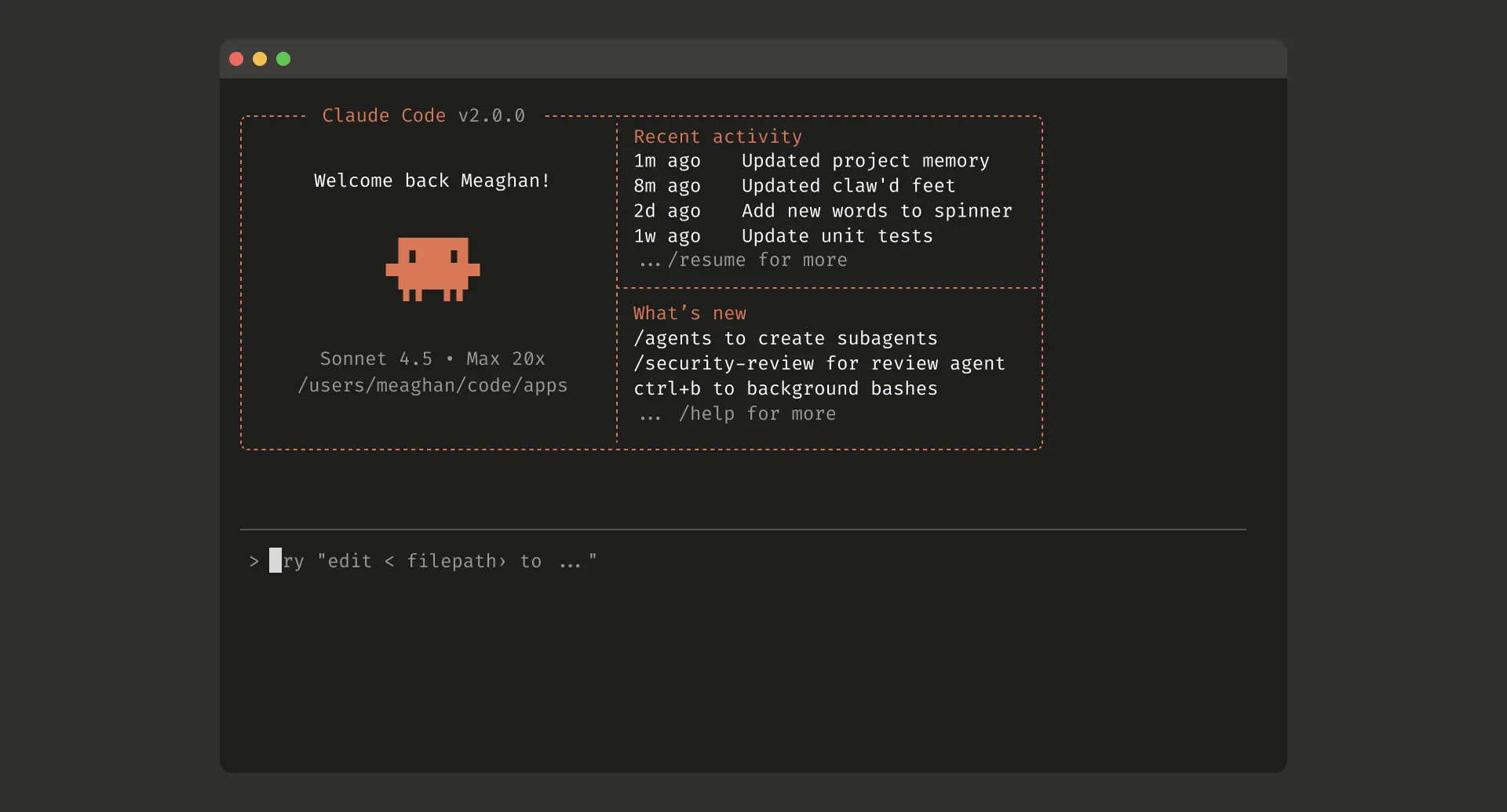

Claude Code is Anthropic's agentic coding tool that runs in your terminal and reads your full codebase. For SaaS SEO, it handles technical audits, schema generation, programmatic page builds, and data analysis from Google Search Console and GA4, all through plain-language instructions. You do not need to be a developer to use it.
Most SaaS marketing teams treat SEO and development as separate functions. The SEO team flags a problem. The dev team adds it to the backlog. Three sprints later, the meta description on the pricing page still reads "undefined." Claude Code collapses that gap. It sits in your codebase, understands your site architecture, and executes SEO changes directly. This guide covers the specific use cases that matter for B2B SaaS teams, with examples of what to actually run.
What Is Claude Code?
Claude Code is an agentic coding tool that reads your codebase, edits files, runs commands, and integrates with your development tools. It is available in your terminal, IDE, desktop app, and browser.
The distinction that matters for SEO teams: this is not a chat interface. Unlike chat-based AI tools, Claude Code has full access to your project files, can execute commands, and makes changes with your approval.
Despite its name, you can use Claude Code for more than just coding. It works in plain English so you do not have to be an engineer to use it.
Three capabilities make it genuinely useful for SEO work:
- Full codebase awareness. Claude reads your file structure, Git history, and dependencies automatically. Ask about any part of your project and it already knows the context.
- Agentic execution. Claude does not just suggest code; it writes files, runs commands, creates commits, and verifies its own work. You approve each action.
- Extensibility via MCP. The Model Context Protocol (MCP) is an open standard for connecting AI tools to external data sources. With MCP, Claude Code can read your design docs in Google Drive, update tickets in Jira, pull data from Slack, or use your own custom tooling.
For SaaS SEO specifically, that third point is where things get interesting.
Why Does Claude Code Matter for SaaS SEO Teams?
SaaS SEO has a structural problem: the work that moves rankings is mostly technical, but the people who understand what needs doing (marketers, SEOs) rarely have write access to the codebase. The result is a permanent queue of deferred fixes.
For solo founders and lean marketing teams, the barrier between "knowing what is wrong" and "fixing the code" has vanished. The traditional model of hiring an expensive agency to deliver a 50-page PDF audit that nobody reads is dead.
Claude Code changes the equation because it operates at the project level, not the prompt level. It reads the full codebase, plans an approach across multiple files, executes changes, runs tests, and iterates on failures. The developer defines the goal and reviews the result rather than guiding each step.
That is exactly how SEO should work inside a SaaS company: identify the problem, execute the fix, verify it did not break anything, ship.
Team 4's position on this is clear. SEO and web development are one discipline, not two. You cannot bolt technical fixes onto an existing site after the fact. Claude Code is one of the few tools that actually enforces that discipline in practice. For more on how Team 4 approaches SaaS SEO as a system, the full guide covers the underlying strategy.
Use Case 1: Running a Full Technical SEO Audit
The most immediate application is the technical audit. Traditional tools give you a CSV of issues. Claude Code gives you a prioritised action plan with fixes it can implement in the same session.
Manual SEO audits take too much time and often miss things. Claude Code with Puppeteer MCP automates this. Puppeteer is an MCP that gives Claude a real browser it can control. This means Claude Code can visit your website, look at it the same way search engines do, and give you detailed insights.
A practical example: point Claude Code at your site with a prompt like:
Analyse my SaaS website and identify all technical SEO issues. Check meta tags, structured data, page speed, mobile rendering, internal links, and crawlability. Write findings to a markdown file with severity levels.
Claude Code organises itself by making todos. It works through each step using Puppeteer to get real data from your site, checking meta tags, measuring how fast pages load, checking structured data, and even taking mobile screenshots.
For teams that want a more structured approach, the open-source Claude SEO skill automates this at scale. You type /seo audit and 9 AI agents analyse your website in parallel, producing a 0-100 SEO health score with a prioritised action plan. The audit covers 7 weighted categories: content quality (23%), technical SEO (22%), on-page SEO (20%), schema (10%), performance including Core Web Vitals (10%), AI search readiness (10%), and images (5%). Each audit produces a prioritised action plan with critical, high, medium, and low severity levels.
Once you have findings, Claude Code does not stop at the report. If your audit reveals 50 pages with missing meta descriptions or duplicate H1 tags, you do not need to touch them manually. You tell Claude Code: "Based on the audit file, update all metadata across the /blog directory to match our current brand voice and keyword targets." The agent scans every file, makes the edits, and runs a test build to ensure nothing broke.
Use Case 2: Schema Markup and Structured Data Generation
Schema markup is one of the highest-leverage technical SEO tasks for SaaS companies. It drives rich results, improves AI search visibility, and is almost always deprioritised because it requires writing JSON-LD by hand across dozens of pages.
Claude Code removes that friction. Rather than applying surface-level changes, it analyses the entire codebase, understands the routing structure, page hierarchy, content types, and i18n setup, and then systematically implements a complete SEO strategy across every single page.
For a SaaS product, the most important schema types to implement are:
- SoftwareApplication on your product and feature pages
- FAQPage on relevant content pages (where Google still supports it)
- Article or BlogPosting on your blog and resource content
- BreadcrumbList across your site structure
- Organization on your homepage and about page
A practical prompt to use:
Audit all pages in /src/pages for missing or incorrect schema markup. Generate JSON-LD for each page type based on its content. Implement the schema and validate it against Google's guidelines.
The Claude SEO skill covers Schema.org markup detection and JSON-LD generation, as well as Generative Engine Optimization (GEO) for Google AI Overviews, ChatGPT, Perplexity, and Bing Copilot. That last point matters: schema is no longer just about Google rich results. It is a signal to AI search engines deciding whether to cite your content.
Team 4 covers the full picture of GEO, AEO, and LLM optimisation in a separate guide if you want to understand how schema fits the broader AI search strategy.
Use Case 3: GSC and GA4 Data Analysis
One of the most underused applications of Claude Code for SaaS SEO is cross-referencing your Google Search Console data with GA4 and paid search performance. This is normally a spreadsheet job that takes an afternoon.
Claude Code within Cursor has become the fastest way to handle many tasks, including pulling and analysing data from Google Search Console, GA4, and Google Ads.
Claude Code can read all of them at once and answer questions that would normally mean a lot of tab-switching and VLOOKUP work.
For example: "Compare the GSC query data against the Google Ads search terms. Find keywords where we are paying for clicks but already have strong organic positions. Also find keywords where we are spending on ads with zero organic visibility."
For SaaS companies running both SEO and PPC, this is directly actionable. Team 4's position on organic before paid is built on exactly this kind of analysis: find where organic is already working, pull back paid spend there, and redirect budget to the gaps. The B2B SaaS PPC and Google Ads strategy guide covers how to act on those findings.
You can also use Claude Code to connect to live GSC data via MCP. The Claude SEO skill integrates with MCP servers for live SEO data, including official servers from Ahrefs and Semrush, plus community servers for Google Search Console, PageSpeed Insights, and DataForSEO.
Use Case 4: Programmatic SEO Page Builds
For SaaS companies with a broad feature set, multiple integrations, or a large number of use cases, programmatic SEO is one of the highest-ROI content investments available. The challenge is always execution: building hundreds of unique, indexable pages without creating thin content that Google ignores.
Programmatic SEO is a content strategy that uses structured data to generate large volumes of unique, indexable pages targeting long-tail search queries at scale. Each page targets a specific query variant, such as city plus service, product plus use case, or tool plus integration.
Claude Code handles both the content generation and the quality controls. Use Claude Code for content that needs to read as genuinely distinct per page, such as paragraphs, context sections, and explanatory copy. Use a template engine for structural HTML, meta tags, schema markup, and breadcrumbs. The hybrid approach keeps API costs down and reserves Claude's generation for the parts where it adds actual value.
The key to programmatic SEO that actually ranks is data quality. The sites that fail at programmatic SEO generate pages where the only difference is a city name. The sites that succeed have differentiated data per entity: local stats, specific product features, real pricing differences, actual user reviews. Claude Code helps you write to those differences at scale.
For SaaS specifically, the highest-value programmatic page types are:
- Integration pages (Your Product + [Tool Name])
- Comparison pages (Your Product vs [Competitor])
- Use case pages (Your Product for [Role] at [Company Type])
- Feature pages targeting specific capability searches
Claude Code can build SEO pages at scale from data sources with quality safeguards, and create high-converting "X vs Y" and "alternatives to X" pages. Those comparison and alternatives pages are exactly where Team4 starts with most SaaS clients, because they convert. The reverse funnel SEO strategy for B2B SaaS explains why bottom-of-funnel content should be built before awareness content.
Use Case 5: Content Audits at Scale
If you have an existing blog or resource library, Claude Code can audit it in a single session rather than page by page.
Export your content from your CMS and drop the file in a project folder. Point Claude Code at that blog export and it will surface structural issues, voice inconsistencies, publishing trends, and content decay across dozens or hundreds of articles at once.
Pair this with GSC data and you get a content audit that identifies which pages are losing rankings, which are cannibalising each other, and which have the most potential for quick wins through optimisation rather than new content.
When cross-referencing AI citations against GSC data, two blog posts competing for the same AI citations on GEO-related queries were discovered. One had 12 times as many Copilot citations as the other, despite both targeting similar intent. That led to a consolidation decision that would not have been made based solely on traditional rank data.
Team 4's guide to conducting a content audit with Google Search Console covers the strategic layer. Claude Code handles the execution once you know what to look for.
What Claude Code Does Not Replace
Claude Code is a force multiplier for execution. It is not a substitute for SEO strategy.
It will not tell you which keywords to target, which pages to prioritise, or whether your site architecture is set up to compound authority over time. It executes well when given clear direction. Without that direction, it produces technically correct output that solves the wrong problem.
This is Team 4's standing position on AI in marketing: AI handles the repetitive work, humans handle the thinking. Engineers focus on architecture, product thinking, and continuous orchestration: managing multiple agents in parallel, giving direction, and making the decisions that shape what gets built. The same applies to SEO. You still need someone who understands the strategy before Claude Code can execute it effectively.
For SaaS companies that want to understand how AI fits into a broader inbound system, Team4's guide to AI-powered inbound marketing covers how the pieces connect.
Common Mistakes to Avoid
- Running audits without a data directory. Claude Code's analysis is only as good as the data you give it. Set up a project folder with GSC exports, GA4 data, and your CMS export before starting.
- Letting it write to production without review. Claude Code requires explicit permission before modifying files or running commands. It works within your existing environment. Decisions about what code ships remain with the human. Always review diffs before merging.
- Generating programmatic pages without differentiated data. Thin programmatic content gets filtered by Google. The data layer has to be rich before Claude Code generates from it.
- Using it for keyword strategy. Claude Code cannot pull live SERP data on its own. Connect it to DataForSEO or Ahrefs via MCP if you need live keyword research.
- Skipping the CLAUDE.md file. This is the project-level instruction file Claude reads at the start of every session. Use it to define your brand voice, target keywords, and site conventions so every output stays consistent.
About Team4
Team4 is a B2B SaaS inbound marketing agency based in London. The team builds Inbound Engines for start-ups and scale-ups that want search to drive pipeline, not just traffic. Services cover SEO, Generative Engine Optimisation, Webflow development, and PPC. No account managers. The strategists do the work.